



Is your service truly safe at 3 am, or are you simply hoping the rota holds together until morning? The safety of a care setting is most at risk when the world is asleep, yet securing quality night shift support worker cover is frequently treated as a secondary administrative task rather than a vital clinical function. You understand the immense pressure of managing last-minute cancellations whilst striving to avoid a “Requires Improvement” rating from the CQC. It’s a stressful balance that requires more than just a person to fill a gap; it demands a professional who is as vigilant at midnight as they are at midday.
We believe that every hour of care should reflect the same high standards of dignity and expertise. This guide will show you how to maintain clinical safety and continuity through a structured approach to staffing. You’ll discover the essential differences between waking and sleep-in roles under current 2026 regulations, and how the latest Employment Rights Bill affects your long-term planning. By the end of this article, you’ll have a clear roadmap for building a stable, 24/7 rota with a partner you can trust to deliver excellence when it matters most.
Key Takeaways
- Understand how robust night cover protects your CQC rating by ensuring fundamental standards are met during the most vulnerable hours of the day.
- Learn to distinguish between waking and sleep-in requirements to ensure your service provides the correct level of clinical intervention and monitoring.
- Evaluate the long-term benefits of professional night shift support worker cover over low-cost alternatives that may risk serious compliance failures.
- Master a comprehensive vetting checklist that goes beyond basic DBS checks to include specific clinical competencies tailored to your residents’ needs.
- Discover how a values-led staffing partner provides reliable emergency cover whilst maintaining continuity of care for your service users.
The Critical Role of Night Shift Support Worker Cover in Healthcare
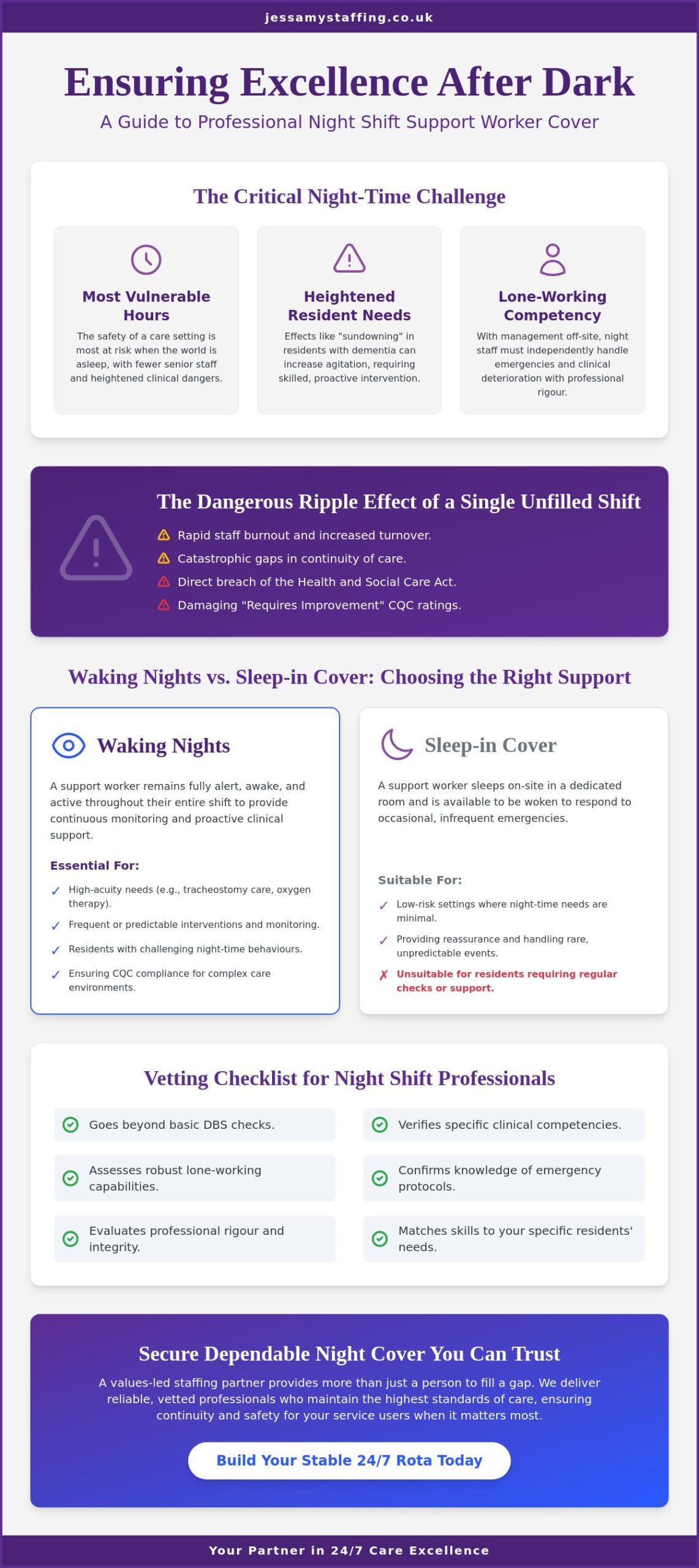
Night shifts represent a unique set of challenges that differ significantly from daytime operations. Whilst the building is quieter, the clinical risks are often heightened. Reliable night shift support worker cover isn’t just about presence; it’s about maintaining the CQC Fundamental Standards when the usual support structures are absent. For residents living with dementia, the “sundowning” effect can lead to increased agitation, confusion, and distress during the twilight hours. Without consistent, trained staffing, these behavioural changes can escalate into safety incidents that threaten both the individuals in care and the provider’s regulatory standing.
Effective care requires a deep understanding shift work and the physiological toll it takes on the human body. When staff-to-resident ratios are compromised at night, the window for preventative intervention narrows significantly. A single medical emergency can leave an entire floor unmonitored if cover is insufficient. High-quality staffing ensures that monitoring remains proactive rather than reactive. This vigilance is essential for preventing falls or medical crises before they reach a point of no return, ensuring that the standard of care doesn’t dip just because the sun has gone down.
Maintaining Safety When the Management Team is Away
During the day, a registered manager or senior lead is usually on hand to navigate complex decisions. At 2 am, that safety net is gone. This makes lone-working competency a non-negotiable requirement for anyone providing night shift support worker cover. Staff must possess the professional rigor to handle emergency escalations and clinical deterioration independently. We believe that integrity is what happens when no one is watching. A support worker who is professionally prepared will maintain the same high standards of dignity and safety throughout the night as they would under direct supervision, ensuring the service remains compliant and residents remain safe.
The Consequences of Unfilled Night Shifts
A single unfilled shift creates a dangerous ripple effect across a care setting. Remaining staff are forced to absorb the additional workload, which leads to rapid burnout and increased turnover. In the complex care environments of Greater Manchester, these gaps can be catastrophic for continuity of care. Beyond the immediate physical risk to residents, there are significant legal and regulatory consequences to consider. Failing to provide safe 24/7 cover is a direct breach of the Health and Social Care Act. This can result in “Requires Improvement” ratings that damage a provider’s reputation and, more importantly, indicate a failure in the duty of care that every resident deserves.
Waking Nights vs Sleep-in Cover: Which Does Your Service Need?
Choosing the right model of night shift support worker cover is a decision that impacts both the safety of service users and the operational sustainability of the provider. It requires a meticulous assessment of risk versus resource. Waking night cover involves a staff member remaining fully alert and active throughout the shift to provide continuous monitoring and clinical support. In contrast, sleep-in cover allows the staff member to sleep on-site, provided they are available to respond to occasional emergencies. The distinction is not merely administrative; it is a clinical choice that dictates the level of safety your service can guarantee.
Local authorities and the CQC often mandate waking nights for individuals with high-acuity needs to ensure compliance with safety regulations. Adhering to Health and Safety Executive guidance helps managers navigate the complexities of fatigue management and staff welfare during these periods. Whilst sleep-in cover is more budget-friendly, it is unsuitable for environments where interventions are frequent or predictable. Choosing the wrong model can lead to regulatory scrutiny and increased incident reports, potentially compromising the trust of families and commissioners alike.
When to Prioritise Waking Night Support
Complex clinical needs, such as tracheostomy care, oxygen therapy, or frequent seizure monitoring, necessitate the constant presence of a waking professional. This level of cover is also essential for supporting residents with challenging night-time behaviours or those at high risk of falls who require proactive supervision. Waking Nights represent the gold standard for high-acuity environments where continuous monitoring is essential for life-preserving care.
The Role of Sleep-in Staff in Supported Living
Sleep-in cover is often the most appropriate choice for supported living settings where the goal is to promote independence. It ensures a safety net is available without being intrusive. Legal requirements, including the provision of private sleeping facilities and adherence to National Minimum Wage regulations for time spent awake, must be strictly followed. The Supreme Court ruling in the case of Royal Mencap Society v Tomlinson-Blake confirmed that the National Minimum Wage is only required for the time workers are awake and working, provided they are expected to sleep for the majority of the shift. If you are unsure which model fits your facility, you might consider how professional staffing partners can help you audit your requirements and provide the right level of support. Jessamy Staffing Solutions organises both types of cover for Greater Manchester providers, ensuring that each shift is filled by a professional who understands the specific demands of their role.
Evaluating Options for Urgent Night Shift Staffing
When a last-minute cancellation occurs just as the day team is preparing to leave, the pressure to secure reliable night shift support worker cover becomes immediate and intense. Managers are often forced to choose between stretching their internal bank staff or engaging an external agency. Whilst internal staff possess valuable site-specific knowledge, it’s common for them to be overextended. Relying on exhausted employees to cover additional night shifts increases the risk of fatigue-related errors, which can compromise the safety of both the worker and the residents.
The temptation to opt for the most affordable agency is understandable in a sector facing tight margins. However, “cheap” cover is frequently a false economy. Providers that offer significantly lower rates often do so by reducing their investment in rigorous vetting and specialised training. A single failure in CQC compliance or a serious safeguarding incident during the night can lead to devastating long-term costs, both financially and reputationally. True value lies in a partner who prioritises “compliance readiness” by ensuring every worker is fully briefed and clinically competent before they step through your door. Having a structured urgent support worker supply checklist in place before a crisis strikes is the most effective way to ensure quality is never sacrificed under pressure.
A dependable 24/7 Emergency Care Staffing UK partner acts as a vital safety net for these high-pressure moments. Having a pre-established relationship with a specialist agency allows you to bypass the stress of vetting new providers during an emergency. It ensures that even a last-minute replacement has been through a stringent selection process, maintaining the continuity of care that residents depend on.
Overcoming the “Consistency” Objection
One of the most common concerns regarding agency use is the perceived lack of consistency. You can mitigate this by treating temporary night staff as an extension of your core team. Providing a structured, written handover and a brief site-specific induction ensures the worker understands the unique needs of the residents and the layout of the facility. This proactive approach transforms a “stop-gap” solution into a seamless integration of professional support. Managers don’t have to settle for fragmented care when they implement clear communication protocols for every shift.
The Benefits of Specialist Night Shift Agencies
Specialist agencies provide access to a pool of professionals who specifically prefer night-time rhythms. These workers are often better adapted to the physiological demands of staying alert whilst the rest of the world sleeps. They bring a focused expertise in areas such as medication administration and MAR chart accuracy, which are critical during the night. By outsourcing this recruitment to a dedicated partner, you reduce the administrative burden on your management team. This allows them to focus on daytime quality improvements rather than being consumed by midnight rota gaps.
Vetting Your Night Shift Support Worker: A Checklist for Success
Vetting is the meticulous process that separates a simple rota filler from a dedicated care professional. When you source night shift support worker cover, the stakes are inherently higher because the oversight is lower. Every worker must have an enhanced DBS and verified right-to-work status as their absolute foundation. Beyond these legalities, you must evaluate their clinical competency with precision. It’s essential to match their specific skill set, whether that’s catheter care, PEG feeding, or stoma management, to the precise needs of your residents. This alignment ensures safety is never compromised and that residents receive the specialised support they deserve throughout the night. Care managers who follow a robust rapid-response checklist for urgent support worker supply are far better positioned to maintain these standards even during unexpected staffing crises.
Reliability takes on a different dimension after dark. If a day worker is ten minutes late, the impact is manageable amongst a full team; however, if a night worker is late at 10 PM, it prevents the day team from leaving and creates immediate friction within the workforce. Punctuality is a direct reflection of a worker’s professional integrity and their respect for their colleagues’ well-being. Similarly, communication skills are vital for continuity. The quality of morning handover notes determines how well the day team can support residents, making clear, accurate, and legible reporting a non-negotiable requirement for any night professional. Managers seeking broader guidance on workforce quality and Regulation 18 compliance will find that exploring comprehensive care home staffing solutions provides a valuable strategic framework for building a resilient, compliant team across all hours.
Essential Training Standards for Night Personnel
When providing night shift support worker cover, all staff must hold current certifications in Moving and Handling, Safeguarding, and Basic Life Support. For more specialised environments, such as children’s complex care or advanced dementia units, additional training in epilepsy awareness or PEG feeding is often required. Jessamy provides accredited Socialcare Training & Development to ensure that every professional we supply meets these rigorous marks. This commitment to education means you don’t have to worry about compliance gaps. You can trust that the staff entering your building are not just present, but fully capable of delivering high-quality, safe care.
Assessing “Night Suitability”
Not every excellent day worker is suited for the night. The role requires individuals who demonstrate high levels of alertness and the initiative to act decisively when management isn’t on-site. The quiet, often lonely hours of the night require a specific temperament marked by deep empathy and patience, especially when supporting residents who may be confused or distressed. The ideal night worker balances meticulous professional rigor with the compassionate human warmth necessary to reassure residents during the most vulnerable hours of their day.
If you need to ensure your team is supported by fully vetted professionals, you can secure compliant night shift cover through our dedicated staffing solutions.
Securing Dependable Night Cover with Jessamy Staffing Solutions
Jessamy Staffing Solutions operates as a meticulous guardian of standards, ensuring that every professional we provide is fully equipped to handle the unique demands of out-of-hours care. Our values-led approach means we don’t just supply staff; we provide “professionally prepared” individuals who understand that their role is a vital safety function. By integrating our Socialcare Training & Development directly with our staffing supply model, we ensure that every person providing night shift support worker cover is current with their certifications and clinical competencies. This seamless connection between education and delivery creates a dependable workforce capacity that allows our partners to focus on their core mission of care.
We understand that reliability is the foundation of trust in the healthcare sector. Our commitment to 24/7 availability ensures that Manchester care providers are never left without a solution, even during the most unsociable hours. We position ourselves as a stable, long-term partner, prioritising the well-being of your residents as much as the operational success of your organisation. This sense of duty drives us to maintain a high register of excellence in everything we do, from initial vetting to the final handover of a shift.
The Jessamy Difference in Greater Manchester
Our team possesses a deep understanding of the Manchester care economy and the specific regulatory pressures faced by local providers. We employ a rigorous recruitment process that filters for integrity and a sincere sense of duty, ensuring our staff are not just technically skilled but emotionally intelligent. This local expertise allows us to provide tailored Emergency Staffing for Supported Living that meets the high standards expected by the CQC and local authorities alike. We act as a bridge between institutional requirements and human needs, projecting an image of reliability that instils confidence in our clients.
How to Request Emergency Night Cover
Securing high-quality support during an emergency should not be a complex process. You can contact our dedicated 24/7 team at any time for immediate assistance with your rota gaps. To ensure we provide the most suitable match for your service, please have the following information ready:
- The specific type of night shift support worker cover required, such as Waking Night or Sleep-in.
- Any specialised clinical needs, including tracheostomy care, PEG feeding, or seizure monitoring.
- The anticipated duration of the cover and any essential site-specific induction requirements.
Our methodical approach ensures that we don’t just fill a gap; we provide a professional who is a genuine asset to your team. Contact Jessamy Staffing for Reliable Night Shift Cover to discuss how we can support your service’s safety and compliance objectives.
Strengthening Your 24/7 Care Standards
Ensuring the safety of your residents during the quietest hours requires more than just filling a rota gap; it demands a commitment to clinical excellence and regulatory compliance. By distinguishing between waking and sleep-in needs and implementing a rigorous vetting process, you protect both your service users and your CQC rating. Reliable night shift support worker cover acts as the backbone of a resilient care setting, providing essential peace of mind when management is off-site. It’s about maintaining a seamless standard of dignity that doesn’t falter when the sun goes down.
As an accredited social care training provider and specialists in Greater Manchester care staffing, we provide the stability your organisation needs to thrive. Our 24/7 emergency response team is always ready to bridge the gap between institutional requirements and compassionate care. You don’t have to navigate the complexities of out-of-hours staffing alone. A principled partnership ensures your service remains a sanctuary of safety every hour of the day.
Secure Reliable Night Shift Cover Today
Frequently Asked Questions
What is the difference between a waking night and a sleep-in shift?
Waking night shifts involve the support worker remaining alert and active for the entire duration of the night to provide continuous monitoring. Sleep-in shifts allow the professional to sleep at the facility, provided they are available to be woken for occasional emergency assistance. This distinction ensures that the level of supervision directly matches the clinical needs and risk profile of the residents in your care.
How quickly can I secure emergency night shift support worker cover?
You can secure night shift support worker cover immediately through our 24/7 emergency response team. We prioritise rapid deployment for last-minute rota gaps to ensure your service remains safe and compliant at all times. Our established pool of professionals across Greater Manchester allows us to respond to urgent staffing requests with precision, often providing a suitable match within a few hours of your call.
Are night shift support workers required to have specific training?
All night personnel must hold current certifications in mandatory areas such as Safeguarding, Basic Life Support, and Moving and Handling. Depending on the specific environment, workers may also require specialist training in dementia support or children’s complex care. Our commitment to Socialcare Training & Development ensures that every professional we supply is fully prepared to handle the unique clinical demands of a night-time setting.
How do you ensure the safety of residents when using agency night staff?
Resident safety is maintained through a rigorous vetting process that includes enhanced DBS checks, right-to-work verification, and a thorough assessment of clinical competencies. We match each worker’s specific skills to the individual needs of your residents to ensure a high standard of care. Providing a structured handover for the agency professional further integrates them into your safety protocols, minimising risk during the quietest hours.
Can I request the same support worker for recurring night shifts to ensure continuity?
We actively encourage requesting the same support worker to promote continuity of care and build trust with your residents. Familiarity with a resident’s night-time routines and specific behaviours significantly improves the quality and comfort of the support provided. Whilst we specialise in emergency response, we strive to maintain consistent placements for recurring shifts to support the long-term stability and cohesion of your care team.
What happens if a night shift worker is unable to attend their shift at the last minute?
Our 24/7 management team takes immediate responsibility for finding a replacement if a worker is unable to attend their shift due to unforeseen circumstances. We maintain a dependable workforce capacity to ensure that your service is never left understaffed during these vulnerable hours. This proactive approach to night shift support worker cover removes the administrative burden from your managers and preserves the safety of the care environment.
Do night shift support workers handle medication administration?
Support workers are authorised to administer medication provided they have completed accredited training and it aligns with your service’s internal protocols. Every worker we supply must demonstrate proficiency in accurate record-keeping and MAR chart completion. This ensures that medication regimes are followed with meticulous care, maintaining clinical safety throughout the night even when the daytime management team is off-site.
Is night shift cover available for private home care as well as residential facilities?
Night cover is available for both institutional residential facilities and private individuals requiring specialised children’s complex care at home. We tailor our staffing solutions to the specific environment, ensuring that the support provided is both clinically robust and respectful of the domestic setting. This flexibility allows families and care providers alike to access high-quality professional support whenever it is most needed.