



A clean Enhanced DBS check is no longer the definitive hallmark of safety; it is merely the baseline. In the high-stakes environment of complex care, relying solely on a certificate can lead to a false sense of security that fails to account for a carer’s character or emotional resilience. We understand that for families, the anxiety of inviting a stranger into your child’s routine is often compounded by the heavy administrative burden of verifying clinical competencies and the constant threat of staff turnover.
By refining your approach to vetting pediatric home care staff through a values-led lens, you can secure a team that is as compassionate as they are clinically capable. This resource guide outlines how to implement a rigorous recruitment process that aligns with 2026 CQC Regulation 19 standards and the updated 28-day employment gap rules. You will learn how to verify specialist qualifications and assess “good character” to ensure full compliance and, more importantly, the peace of mind that comes with a stable, professional care team.
Key Takeaways
- Move beyond basic DBS checks to incorporate values-led assessments that meet the heightened 2026 CQC standards for safeguarding.
- Implement a rigorous framework for vetting pediatric home care staff that balances statutory compliance with verified clinical competency.
- Evaluate the administrative and liability implications of choosing an agency-managed model versus independent recruitment for complex care.
- Ensure a seamless hospital-to-home transition by aligning vetted staff skills with the specific clinical requirements of the child’s discharge plan.
- Leverage regional Greater Manchester expertise to secure reliable 24/7 emergency cover and maintain care continuity during last-minute gaps.
The Landscape of Paediatric Home Care Vetting in 2026
Effective vetting is a promise of safety made to a family. It is a meticulous verification of clinical skill, moral character, and emotional resilience designed to protect the most vulnerable members of our community. In 2026, vetting pediatric home care staff has moved beyond simple compliance; it is now a sophisticated process that accounts for advanced healthcare technologies and the evolving regulatory standards of the Care Quality Commission (CQC). As providers work toward the CQC target of 9,000 assessments by September 2026, the focus has shifted toward proving “good character” under Regulation 19. This means a clean record is no longer the final word; it’s merely the beginning of a deeper assessment into a candidate’s suitability for the sanctuary of a family home.
The role of vetting is to ensure that the home remains a place of healing and growth rather than a sterile clinical annex. Whilst the history of Home care in the United States provides a broader context for the global shift toward community-based services, the UK market is specifically defined by a commitment to safeguarding that is both rigorous and compassionate. Robust vetting directly impacts a child’s development by providing a stable environment where they can reach milestones without the disruption of frequent staff turnover or clinical inconsistency. When families feel secure in the competence of their team, the entire household gains the stability needed to thrive.
The Evolution of Safeguarding in Paediatric Care
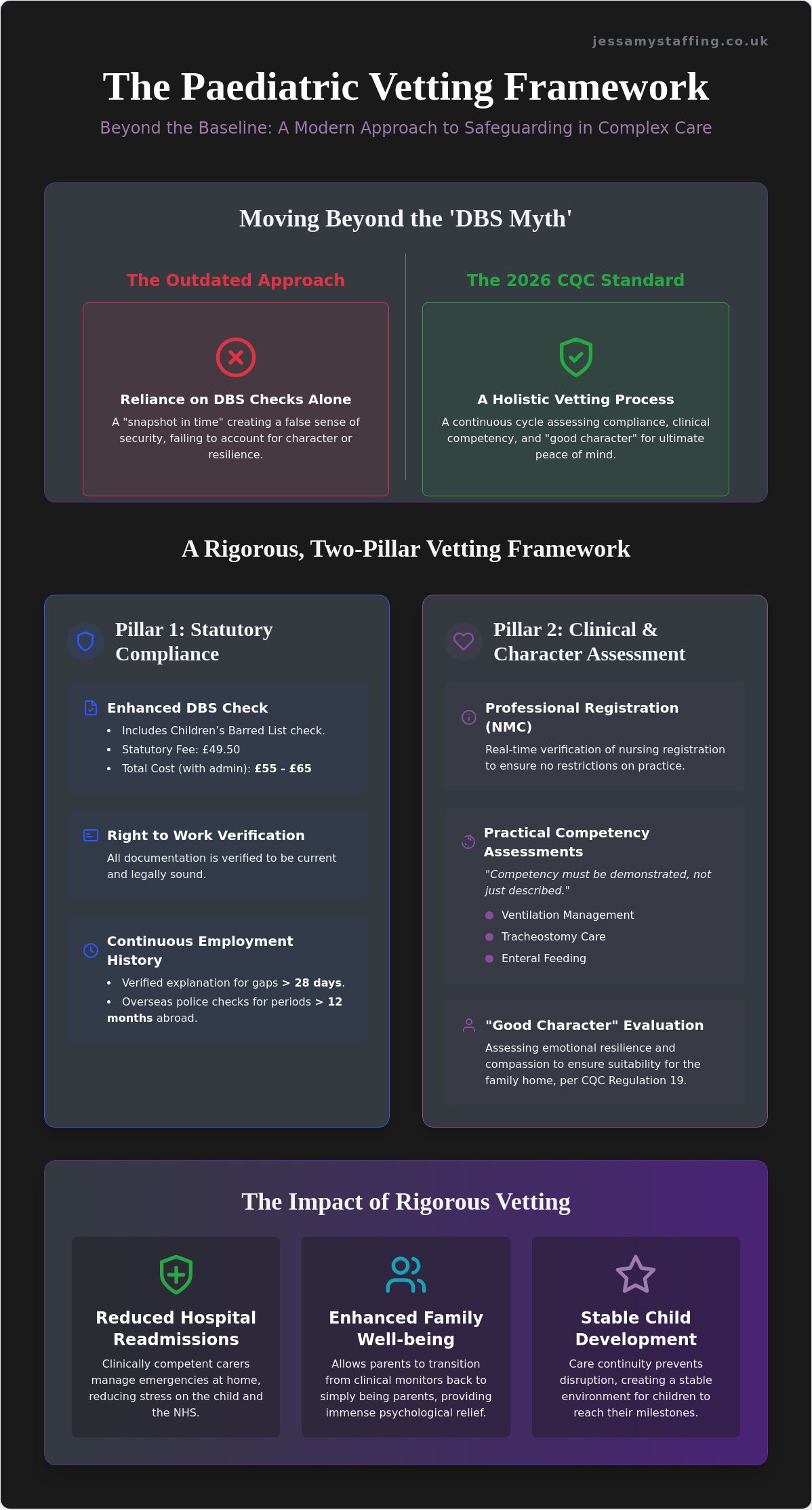
Safeguarding has transitioned from a one-time “Enhanced DBS” check into a cycle of continuous monitoring. The “DBS myth” has been dismantled; providers now recognise that a certificate is a snapshot in time, not a guarantee of ongoing safety. Modern standards require a verified, written explanation for any employment gap exceeding 28 days and overseas police checks for any candidate who has lived abroad for 12 months or more in the last decade. It’s also vital to reject the “small adults” logic. Paediatric vetting must prioritise niche experience in complex care, ensuring that staff are prepared for the unique physiological and emotional needs of children rather than simply applying adult care principles to younger patients.
The Impact of Dependable Staffing on Outcomes
Thoroughly vetted staff are the first line of defence against hospital readmissions. When a carer is clinically competent and confident, they can manage complex emergencies at home, preventing unnecessary stress for the child and the NHS. This reliability offers an immense psychological benefit to parents; it allows them to transition from being constant clinical monitors to simply being parents again. In the context of home-based paediatric staffing, clinical governance is the structured framework of accountability that ensures every staff member maintains the highest standards of safety, clinical effectiveness, and compassionate care within the family environment. This system of checks and balances ensures that excellence is not accidental, but a deliberate and repeatable outcome of the recruitment process.
Clinical Excellence: The Paediatric Vetting Framework
Statutory compliance is the bedrock of clinical safety. Whilst general federal background check requirements offer a global perspective on childcare safety, the UK framework for vetting pediatric home care staff is exceptionally stringent. Every staff member must possess an Enhanced DBS certificate with a clear Children’s Barred List check. As of July 2026, the statutory fee for an Enhanced DBS is £49.50, though administrative processing often brings the total to between £55 and £65. Beyond these criminal record checks, providers must verify the Right to Work in the UK, ensuring all documentation is current and legally sound.
Clinical excellence requires more than just a clean record. For nurses, this involves a real-time verification of their Nursing and Midwifery Council (NMC) registration to ensure no restrictions on practice exist. Support workers require a different approach, focusing on accredited training that meets the 2026 standards. We believe that competency must be demonstrated, not just described. Our framework includes practical assessments for high-risk clinical tasks such as ventilation management, tracheostomy care, and enteral feeding. It is about ensuring that when a crisis occurs, the staff member is already prepared to act with precision.
Accredited Training and Competency Verification
We place a premium on paediatric complex care training UK because generic social care certificates are insufficient for children with life-limiting conditions. Our vetting process evaluates a candidate’s readiness for emergency protocols, specifically regarding seizure management and equipment failure. By 2026, Continuous Professional Development (CPD) has become a mandatory vetting pillar. This ensures staff stay updated on the latest Standard 16 requirements concerning learning disabilities and autism, reflecting the 2022 Health and Care Act.
The Human Element: Values-Led Vetting
Technical skill is only half the equation; the “Jessamy Way” integrates a values-led methodology to find the right human fit. Our approach to vetting pediatric home care staff uses behavioural interviewing to gauge how a carer handles high-pressure home situations or respects domestic boundaries. It is vital that a carer understands they are a guest in a family sanctuary. If you are looking for a partner who prioritises this balance, our specialist staffing services can help you build a team that feels like a natural extension of your family.
Choosing Your Model: Agency Managed vs. Independent Vetting
Families often face a difficult decision between recruiting staff independently or partnering with a professional provider. Both paths offer different levels of control, but the administrative and clinical responsibilities vary significantly. When vetting pediatric home care staff privately, the family becomes the legal employer. This means you’re responsible for managing rotas, processing payroll, and ensuring continuous compliance with evolving UK employment laws. It’s a substantial commitment that often distracts from the primary goal of supporting a child’s wellbeing. For a comprehensive overview of navigating these responsibilities, our guide to children’s complex care recruitment UK provides a clear roadmap for families managing Personal Health Budgets and the latest SCCIF regulatory updates.
Liability remains a critical consideration in this choice. In an independent model, the family typically carries the burden of responsibility if a clinical error occurs. This requires specialised insurance and a deep understanding of medical protocols. Conversely, a managed service provides a protective layer of institutional accountability. Agencies carry comprehensive professional indemnity insurance and maintain strict clinical oversight, ensuring that every intervention is performed according to the highest standards of safety.
The Risks of Independent Recruitment
The challenge of verifying complex clinical skills without an institutional framework is a significant hurdle. Without a clinical lead to oversee the process, families may find it difficult to assess a carer’s proficiency in tracheostomy care or ventilation management accurately. This lack of professional supervision often leads to “carer burnout.” Independent staff lack the peer support and structured breaks that an agency provides, which can lead to high turnover and disrupted routines. The burden of HR management, from holiday pay to disciplinary procedures, rests entirely on the parents.
The Managed Agency Advantage
Partnering with a paediatric nursing agency UK offers a level of reliability that independent recruitment rarely matches. Agencies provide guaranteed backup, ensuring that 24/7 coverage remains intact even during staff sickness or last-minute emergencies. This professional supervision includes regular clinical audits and support from a dedicated clinical lead, which is essential for maintaining high standards.
A managed model also streamlines the delicate transition from hospital to home. By providing teams who are already pre-vetted and trained in specific clinical needs, agencies remove the stress of vetting pediatric home care staff under tight discharge deadlines. This structured approach ensures that the focus remains on the child’s recovery and the family’s stability, rather than the logistics of recruitment. It’s an investment in long-term peace of mind that allows parents to step back from the role of HR manager and return to being a family.
The Transition: From Hospital Discharge to Home Staffing
The discharge of a child with complex needs from a hospital setting is a moment of profound relief tempered by logistical intensity. Within the critical 72-hour discharge window, the focus must shift from acute clinical management to sustainable home-based care. This transition requires a seamless alignment between NHS discharge teams and the home care provider to ensure that the process of vetting pediatric home care staff is tailored to the child’s specific, immediate requirements. It’s not enough for staff to be generally qualified; they must be specifically briefed on the unique equipment, medications, and routines that define the child’s daily life.
Collaboration with multidisciplinary teams ensures that every staff member entering the home has been vetted against the exact clinical competencies required for that specific case. Phased introductions are a vital component of this transition. By allowing staff to shadow parents or hospital nurses before their first solo shift, we build the necessary trust and rapport. Clear communication protocols between parents, the agency, and the staff member ensure that everyone is aligned on expectations from day one, reducing the risk of early turnover.
Staffing for Social and Educational Integration
Vetting must also extend to the child’s life outside the home. Carers often provide school-based support or accompany families on community outings, which requires a specific set of skills. When vetting pediatric home care staff for these roles, we look for individuals who can facilitate play and social interaction whilst maintaining high clinical safety standards. This ensures that the care plan aligns perfectly with the child’s Educational Healthcare Plan (EHCP), supporting their development in every environment. It’s about finding staff who can balance the clinical with the communal; for parents wishing to further explore developmental bonding activities, you can learn more about Mother And More and their infant wellness classes.
Ensuring this level of support continues in the classroom is equally vital for a child’s development. To understand how educational institutions manage the recruitment of high-quality professionals, check out Focused EDU Staffing Group for their expertise in K-12 educator and substitute placement.
Protecting the Family Sanctuary
Maintaining professional boundaries in a domestic environment is essential for the longevity of any care package. Vetted staff are trained to respect the home as a sanctuary, not just a workplace. This includes clear reporting structures where staff communicate directly with clinical leads to resolve issues, rather than placing the administrative burden on the family. For detailed advice on preparing your environment for a care team, refer to our children’s complex care at home guide. If you are managing a complex discharge and need immediate, reliable support, our 24/7 emergency staffing solutions ensure that your child returns to a safe and professionally managed environment.
Securing Reliable Paediatric Staffing in Greater Manchester
Geographic proximity is a vital component of staffing reliability that is often overlooked. In the Greater Manchester area, our deep understanding of local transport links and regional healthcare pressures allows us to manage staff travel and response times with meticulous precision. We recognise that for families in the North West, a carer’s ability to arrive on time is just as critical as their clinical proficiency. By sourcing and vetting pediatric home care staff who are based within the local community, we ensure a dependable workforce that can navigate the specific logistics of the region, from the city centre to the surrounding boroughs.
Emergency situations don’t wait for administrative convenience. Our rapid-response model is designed to address last-minute gaps without compromising on the rigorous safety standards we’ve established. When a shift needs filling urgently, we utilise a pre-vetted pool of specialists who are already cleared to work in complex home environments. This ensures that even in an emergency, the process of vetting pediatric home care staff remains uncompromisingly thorough, providing families with the reassurance that any professional entering their home has been subjected to the same high level of scrutiny as their regular team.
Local Knowledge and Rapid Response
Families in Manchester require a partner who understands the local healthcare landscape, including the specific safeguarding protocols updated by Manchester Children’s Services in January 2026. We prioritise 24/7 emergency care staffing UK to ensure that no child is left without essential clinical support. Our local expertise allows us to partner effectively with Integrated Care Boards (ICBs) and social services throughout Greater Manchester, facilitating funded care packages that are both compliant and compassionate. We understand the local geography, which enables us to maintain a stable workforce capacity that matches the needs of families across the region.
The Jessamy Promise for Manchester Families
Our commitment to excellence is grounded in a sense of duty to the families we serve. We believe that professional preparation is the only way to strengthen sensitive care environments, ensuring that every staff member is a stable and principled partner in a child’s journey. The process begins with a comprehensive initial assessment, moving through our values-led recruitment methodology to a precise staff placement. We invite Greater Manchester case managers to contact our clinical lead to discuss specific paediatric staffing gaps and explore how our values-led recruitment can support your current caseload. By choosing a partner with deep local roots, you’re investing in a service that values the well-being of the child as much as the success of the organisation.
Building a Foundation of Clinical Trust
Establishing a safe and stable home environment for a child with complex needs requires more than just compliance; it demands a commitment to high standards and moral integrity. Implementing a meticulous process for vetting pediatric home care staff ensures that clinical precision never comes at the expense of a family’s peace of mind. By moving beyond basic background checks to include values-led assessments and continuous competency monitoring, you can bridge the gap between hospital discharge and a thriving life at home.
As a CQC-regulated provider, we prioritise professional rigor through accredited clinical training for all our complex care personnel. We understand that emergencies don’t keep office hours, which is why we provide 24/7 emergency cover across Greater Manchester to maintain the continuity your child deserves. Whether you are a case manager or a parent, our goal is to act as a stable partner in your child’s journey. Secure reliable, vetted paediatric staffing for your service or family today and ensure your care team is prepared for every clinical eventuality. You don’t have to manage these complexities alone.
Frequently Asked Questions
What specific qualifications should I look for when vetting paediatric home care staff?
You should prioritise candidates who hold valid NMC registration for nursing roles or the Care Certificate for support workers. In 2026, the Care Certificate includes mandatory training on learning disabilities and autism under Standard 16. It is also essential to verify specific certifications in Paediatric Advanced Life Support (PALS) and any niche training related to your child’s specific medical equipment or condition.
How does a paediatric nursing agency verify clinical competency for complex equipment?
We verify clinical competency through practical, equipment-specific assessments supervised by a clinical lead. Every staff member must demonstrate their ability to manage ventilators, tracheostomies, or enteral feeding pumps in a controlled setting before being signed off. This ensures that the process of vetting pediatric home care staff includes tangible evidence of skill rather than just a review of past experience.
Can parents be involved in the final vetting and interview process?
Parents can and should be involved in the final stages of the recruitment process to ensure a strong cultural fit. Whilst the agency manages the technical and regulatory aspects of vetting, the family’s intuition regarding a carer’s personality and respect for domestic boundaries is vital. We facilitate meet-and-greet sessions where families can assess how a carer interacts with their child before shifts begin.
What is the difference between a standard DBS and an Enhanced DBS for paediatric care?
The primary difference lies in the depth of the background check and the inclusion of the Children’s Barred List. A Standard DBS only lists spent and unspent convictions; however, an Enhanced DBS is the legal requirement for paediatric care. It includes a check against the Children’s Barred List and any relevant information held by local police, providing the highest level of safeguarding for vulnerable children.
How do you ensure staff stay updated on the latest paediatric clinical protocols?
Continuous Professional Development (CPD) is a mandatory requirement for all our staff to ensure they remain at the forefront of clinical safety. We provide annual refresher training and real-time updates on changing regulations, such as the 2026 Manchester Children’s Services procedures. This structured framework ensures that every carer is informed about the latest evidence-based practices and statutory safeguarding requirements.
What happens if a vetted staff member is unable to make their shift at short notice?
Our 24/7 emergency cover pool ensures that last-minute gaps are filled by pre-vetted professionals who are already familiar with complex care. We maintain a local workforce in Greater Manchester to ensure rapid response times and minimal disruption to your child’s routine. If a regular staff member is absent, we deploy a specialist who has been briefed on your child’s specific clinical needs.
Is paediatric home care staffing in Manchester covered by local authority funding?
Funding for paediatric care in Greater Manchester is available through several statutory routes, including NHS Continuing Healthcare (CHC) and social services budgets. We work closely with local Integrated Care Boards (ICBs) to facilitate these funded packages. Families can also utilise Direct Payments to secure our specialist staffing if they prefer to have more direct control over their care provision.
Do you provide vetted staff for children with autism and complex behavioural needs?
We specialise in providing staff who are expertly trained in managing autism and complex behavioural needs alongside clinical requirements. The process of vetting pediatric home care staff for these roles focuses on emotional resilience and proficiency in de-escalation techniques. All personnel are vetted for their ability to provide compassionate, patient-centred support that respects the unique sensory and communication needs of the child.